Planning a pool, dock, or addition on Lake Minnetonka can raise a quick question: how close to the water can you actually build? If you own in Minnetrista, you face unique shoreland rules that protect the lake while shaping what is possible on your lot. You want a clean path to approvals, no surprises, and a design that fits your lifestyle and the shoreline.
This guide explains how shoreline setbacks work on Lake Minnetonka, who regulates what, and how to position your project for a smoother review. You will learn key terms like OHWL, what triggers permits, and practical ways to design within the rules. Let’s dive in.
Who regulates shoreline projects
Understanding roles upfront prevents delays. On Lake Minnetonka, approvals often involve two or more agencies working in parallel, each with different responsibilities.
Minnesota DNR
The Minnesota Department of Natural Resources sets statewide minimum shoreland standards and regulates “work in public waters.” If your project alters the lakebed, changes the shoreline below the Ordinary High Water Level (OHWL), or involves permanent armoring, you will likely need DNR review or permits. Local governments adopt and implement standards that meet or exceed DNR minimums.
Hennepin County
Hennepin County administers shoreland standards in unincorporated areas and often supports cities on technical matters. County staff address erosion and stormwater control and may require permits for grading or increases in impervious surface related to shoreland projects. They can also help interpret the OHWL and confirm if your lot is within a regulated shoreland area.
City of Minnetrista
Minnetrista is your primary contact for building and zoning permits for additions, pools, decks, and patios. The city may apply a shoreland overlay with specific setbacks, height limits, and lot coverage rules that match or exceed state and county minimums. The city planner or building official can confirm local standards and whether a variance is needed.
Lake Minnetonka Conservation District (LMCD)
The LMCD regulates docks, piers, and mooring on Lake Minnetonka. Even if the city approves your plans, LMCD approval is typically required for docks and certain shoreline uses that affect navigation or public access. Expect rules about dock size, placement, number of moorings, and safety clearances.
Key terms you need to know
A few definitions guide almost every decision near the water.
- Ordinary High Water Level (OHWL). This is the legal boundary used to measure setbacks and define where “work in public waters” begins. It is not the same as the average water level. An official OHWL determination or survey is often needed before design.
- Setback. The horizontal distance measured landward from the OHWL or other reference line. Setbacks limit where structures, grading, or impervious surfaces can go.
- Bluff and bluff impact zone. These are steep slopes near the shoreline that carry extra protections. Bluff rules can expand required setbacks and may prohibit new structures in the bluff or impact zone.
- Impervious surface or lot coverage. Roofs, patios, driveways, and pools count toward impervious limits. Shoreland areas usually have stricter caps to protect water quality, and those limits can shape the size and location of your project.
How setbacks affect common projects
Setbacks, bluff protections, and impervious limits influence design choices. Here is how typical projects are affected on Lake Minnetonka.
House additions
Additions must meet Minnetrista’s zoning and shoreland overlay standards, including primary structure setbacks and height limits. Expanding toward the lake can be complex if the addition enters a required setback or a bluff impact zone. Increases in impervious surface can also trigger stormwater or erosion controls, and in some cases, septic updates or relocations.
A variance may be needed if the design cannot meet setbacks. Early discussion with the city planner helps you weigh options before you commit to plans.
Pools
Pools are usually treated as accessory structures, which means they must meet accessory setbacks from the OHWL and property lines. In-ground pools near bluffs or wetlands often require additional soil, erosion, and stormwater measures. Because pools add impervious area, they can limit the size of other hardscapes unless you use permeable strategies or reduce paved areas.
If the pool location conflicts with bluff protections or setbacks, you may need to adjust the design, move the pool landward, or consider alternatives.
Patios, decks, and driveways
Hardscapes count toward impervious limits in many shoreland codes. Large patios or expanded driveways can push a site over allowed coverage. Permeable pavers and on-site stormwater management, like infiltration or rain gardens, can help your plan stay within thresholds. These measures are often encouraged by reviewers and can reduce friction during permitting.
Docks, piers, and boatlifts
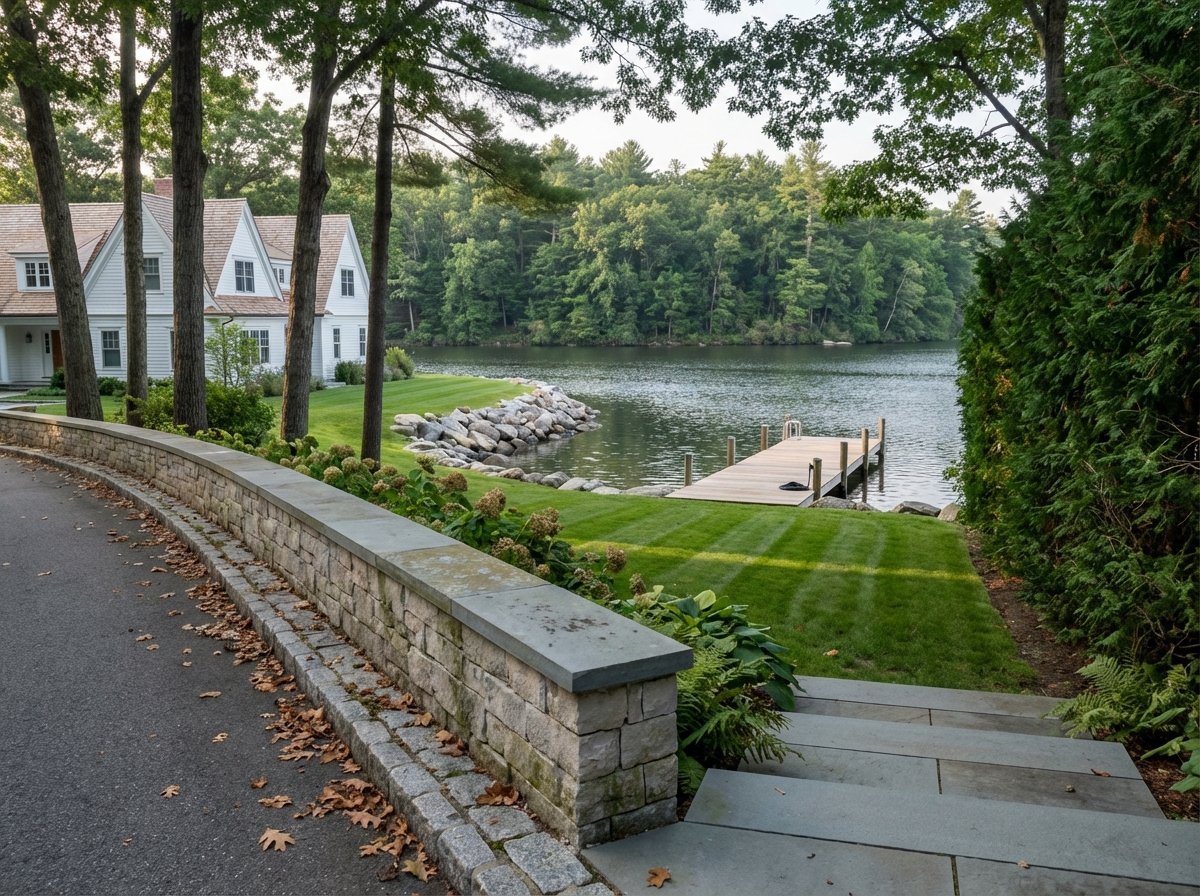
The LMCD oversees docks and mooring on Lake Minnetonka. You will typically need LMCD approval, even with city permits in hand. Expect rules on dock length and width, number of slips based on frontage, and placement that protects navigation and aquatic resources. You may need a site plan, proof of riparian frontage, and documentation that shows how the dock will avoid conflicts with neighbors and vegetation.
City codes can also set limits near the OHWL and property lines. Plan for both reviews if your project includes a dock.
Shoreline stabilization
Riprap, retaining walls, and bioengineered solutions often require permits, especially if work occurs below the OHWL or changes the natural shoreline. Regulators tend to prefer soft-engineered or bioengineered approaches that protect habitat and water quality. Hard armoring usually needs stronger justification supported by professional recommendations.
Permits and approvals: what to expect
Shoreline projects commonly require a combination of approvals. Planning for multi-agency review keeps your timeline realistic and your submittals aligned.
- City of Minnetrista building or zoning permits. Required for structures, additions, decks, and pools. A variance or conditional use may be needed if you cannot meet setbacks or other standards.
- Hennepin County shoreland, grading, and erosion/stormwater permits. Often required when soil is disturbed or impervious surface increases. County staff may set erosion control measures and stormwater treatment requirements.
- LMCD permits for docks and mooring. Needed for private docks and in-lake structures that affect navigation and use.
- Minnesota DNR public waters permits. Required when work extends below the OHWL or affects the lakebed or shoreline profile, such as dredging or certain armoring.
- Wetland-related approvals. If your lot includes regulated wetlands or buffers, additional reviews may apply.
Early verification to avoid redesign
Before you sketch a footprint or book a contractor, confirm the site constraints. These steps save time and prevent redesign mid-permit.
- Get an up-to-date, stamped boundary survey that shows the OHWL, setback lines, bluff lines, utilities, and septic location.
- Verify property lines and legal riparian frontage because dock eligibility depends on frontage.
- Confirm if the lot contains a bluff, bluff impact zone, or regulated wetland.
- Calculate existing impervious coverage and how your proposal changes it.
- Map the septic system and note separation distances that could affect placement.
- Identify the local zoning district and any Minnetrista shoreland overlay standards that apply.
- Check for recorded easements or conservation restrictions that limit buildable areas.
Timeline and cost planning
Shoreline work is doable with the right plan. Build in time for reviews and budget for professional support where needed.
- City permits. Reviews commonly take weeks, depending on complexity and the completeness of your submittal.
- LMCD dock permits. Often several weeks. Spring applications can see higher volume.
- DNR public waters permits. Timeframes vary and can take months if work affects the lakebed or shore below the OHWL. Some minor work may qualify for faster review.
- County erosion and stormwater permits. A few weeks to a couple of months, based on scope.
- Variances or conditional uses. Add months for public notice and hearings.
Typical costs to plan for include a survey and OHWL determination, which can range from several hundred to a few thousand dollars. Permit fees vary by agency and scope. Complex stabilization or bluff sites often benefit from a civil engineer, landscape architect, or shoreland consultant.
Step-by-step due diligence checklist
Use this quick checklist to organize design and permitting for a Minnetrista shoreline project.
- Order a current, stamped boundary survey with the OHWL, bluff lines, setbacks, utilities, and septic location.
- Confirm riparian frontage and LMCD dock eligibility if a dock is planned.
- Meet with Minnetrista planning to review the zoning district, shoreland overlay standards, setbacks, and accessory structure rules.
- Consult Hennepin County on shoreland thresholds, grading, erosion control, and stormwater requirements.
- Determine if a DNR public waters permit will be required for any work below the OHWL or for shoreline armoring.
- Inventory easements or conservation restrictions that may affect placement.
- Prepare a mitigation plan with native vegetation, infiltration, and erosion control to support permit applications.
- Budget time for variances and LMCD review, and schedule work to avoid sensitive seasons if required.
Design strategies that get approved
A few design choices can improve feasibility and speed reviews.
- Start with accurate data. A recent survey and clear OHWL location keep your design grounded in what is actually buildable.
- Favor permeable materials and reduce unnecessary hardscape to manage impervious limits.
- Use native vegetation buffers and infiltration to protect water quality and meet stormwater goals.
- Keep structures out of bluff impact zones whenever possible and step designs landward.
- Submit complete site plans with footprints, coverage calculations, and erosion control details.
When setbacks limit options
Smaller or steep lots can feel constrained. If setbacks and bluff protections leave little buildable area, consider compact footprints, permeable hardscape, and landward relocation of features. You can also explore a variance when justified by site conditions. Early consultation with the city planner and a surveyor helps you set realistic expectations and choose a path that balances goals and approvals.
Working with a local luxury advisor
If you are planning a high-end renovation or a new dock as part of a future sale, aligning the project with shoreland rules protects both the lake and your investment. Coordinating with Minnetrista, Hennepin County, the LMCD, and the DNR takes time and precision. An experienced local team can help you stage the process, select the right professionals, and keep your design compliant without sacrificing lifestyle.
When you are ready to discuss timing, value, and the smartest sequence of improvements, connect with Jeffrey Dewing for confidential guidance tailored to Minnetrista and the west-lake shoreline.
FAQs
What is the OHWL on Lake Minnetonka and why does it matter?
- The Ordinary High Water Level is the legal line used to measure setbacks and determine when work is considered in public waters, so it anchors where you can place structures.
Do I need LMCD approval for a private dock if Minnetrista approves my plans?
- Yes, LMCD jurisdiction over docks and mooring is separate, so most projects need both city approvals and LMCD permits for docks.
How do bluff protections affect my pool or patio in Minnetrista?
- Bluff and bluff impact zones often require larger setbacks and can prohibit new structures, which may push pools and patios farther landward or require redesign.
What permits are common for a lakeshore addition in Minnetrista?
- Expect city building and zoning permits, potential Hennepin County erosion or stormwater permits, and a variance if setbacks or lot coverage cannot be met.
How long do Lake Minnetonka dock permits usually take with the LMCD?
- Reviews often take several weeks, and timing can vary by season, complexity, and application completeness.
Can I use riprap or a retaining wall to stabilize my shoreline?
- It depends on site conditions; bioengineered solutions are preferred, and hard armoring often requires strong justification and permits if work affects the OHWL or lakebed.